Story (Full) 38
Previous Chapter

Next Chapter
The story so far...
In the previous section, the players began exploring a vastly expanded Johnisdead.com. Here, they discovered than many of the site's older pages from 2015 had returned. The site also featured Path Pages - special webpages that took on the appearance of distorted roads in the Parallelos. These pages were navigated by clicking on certain parts of them - eventually branching off and leading to new holes.
The two new holes featured on the site were the "Temple Hole" and "Cavern Hole". These holes revealed new information about the members of the Astral Observatory. First, it was implied that IsocelesAssassin used The Ocarina to travel back to 2009 as The Gray Man. However, his motivation for doing this - as well as his odd actions during this time such as leaving the Cellphone Tower device for SKM - are still unexplained. It's also a mystery how an alternate deceased version of him named "Dead One" exists.
It's also confirmed that Yugi is indeed José - TheArchiveGuy. He travelled back in time to 2016 and used the temporal chaos of Youshouldnthavedonethat.net to enter into the Prime Timeline from the Astral Timeline - as Nocta asked him to do. However, once he retrieved the Lunar Children servers from the Fishery, he began investigating them and attempting to rescue the spirits within them. Eventually, it was discovered that José was doing this instead of aggregating the websites across the two timelines like he was instructed. For his treachery, José was attacked by a masked individual and presumably trapped within Johnisdead.com itself.
The players worked their way through the "Temple Hole" and "Cavern Hole" in an attempt to locate José's spirit. Unfortunately, they discovered that he had already been taken away - presumably by the same entity that killed the rest of the Astral Internet Detectives. This mysterious entity had left a playing card where José's spirit was previously being held - something that we've also seen occur with Astral Wolfcat and IsocelesAssassin, who both have their own respective playing cards. While José's current whereabouts are a mystery, he claims that he's set up several "scripts" on Johnisdead.com that will hopefully aid the players in traversing it.
Meanwhile, the players had rediscovered their old tool from 2015 - the virtual reality web browser known as JanusVR. Using this program, the players were able to once again explore Johnisdead.com pages in the form of sprawling 3D environments. These pages included the return of "Fakeworld", new distorted realms such as "Pillars" and "Under", and a recreation of The Paths known simply as "Path". These Janus Rooms occasionally featured strange, native entities such as "Fascie", "Child", "Deadman", and three enigmatic brothers - "Trapped", "Halicord", and "Stackoverflow". These three brothers actually conversed with the players - though they mainly seemed concerned with the players trespassing in their home...
Afterwards, the players received contact from TheLaw, who cemented his allegience with them. Unfortunately, this now meant that TheLaw was in grave danger now that BUP was well aware of his treachery. In an attempt to stall him, the players lured BUP into a separate Discord Server and used a customized "Binding Rune" on him. While this failed to capture him, it did amuse BUP enough to divulge more of his past.
BUP was originally just another alternate version of Greth - presumably from some mysterious third timeline. After witnessing the events of Jadusable's ARG, this version of Greth was inspired to pursue a degree related to "Esoteric Theology". This eventually led to him founding the original incarnation of the Astral Observatory - as well as him going by the username "Nocta". This original version of the Astral Observatory was centered around paranormal research, implying that the "Researcher Greth" mentioned in recent excerpts is actually BUP's original mortal form. Eventually, Researcher Greth underwent some sort of advanced aggregation, resulting in him becoming BUP. Later on, the title of "Nocta" was stolen by "Kevin Hendricks" - the Nocta we're all familiar with - as he reworked the Astral Observatory into what we know it as today.
Meanwhile, other threats continue to linger in the background... Pumpkinhead left a rather ominous message for the players, threatening to use another spirit as his mask while he waits for the return of Astral Wolf from the Amiibo Dungeon. Additionally, an excerpt from Mat revealed that his encounter with Tenebris back in 2010 gave him some sort of epiphany - one that allowed him to see "the whole story". To make matters worse, the player Dawn was still missing - presumably trapped within "The Machine". Thankfully, it seems as though TheLaw is now offering to assist in solving this crisis...
Table of Contents
Expand the section below to access a table of contents for this chapter.
- Start of Chapter
- Checkpoint #1After exploring the "Sun Tower" Janus room and the contents of Dawn's computer, the players discover a recreation of The Spire in JanusVR.
Character Summaries
Expand the section below to access a list of characters. Hover over their icons to view a brief summary covering their current status.
Relevant Characters

Tyler
BUP

TheLaw

Dawn
Pumpkinhead

IsocelesAssassin

José

GHOSTBABEL

Moonman

Patrem

Greth

Erika

Synchron

Tenebris
Other Characters

John
Regiminis

Mat
Hubbard

The Producer

Yuukichan

Astral Wolf
Vincent
Adams
Unknown Allies
The Great Author
The "GIRL"
The "Angel"
Father Alphonse
Munnin

SKM
Astral
Tyler
Tyler00

Kaiden
Zoromichi
NotAHoax
The Watcher

Nocta
Doug

Alex
Spencer
Kelbris
Old Man

Ben
Hubbard
Max
Samuel
Charleston
Luna

Jacob

Helper

Jeremy
J
Rosa

Chris
Hunter

Diana
Hubbard
Daniel

Zack Nelson
Kayd
Thomas
David
Danielle
Quia
The Man
Mason
Mason
xxxxxxxxx

Ezekiel
Thoth

Jinn

Kuu

Nathen

Hina

Eddie

SheepDog

HarryM1

Alignak

Kalfu

Sin_yarikh

Tsukuyomi
Igaluk
Losna
Hope
Hope's
Friend (M)
Hope's
Friend (F)
Tyler
(SilentDT)
William
Reynolds
Justin
Reynolds
Carla
The Flying
Child

Drowned

Guide
Glossary
Expand the section below to access a list of terms. Hover over them to view their definitions.
Misc.
/x/
152
423
592
727
A
Absque Fascie
Aggregation
Alex's Hall of Fame
Amiibo
Anima
Archive
ARG
Ascended E-Girl
Ascension
Astral Child
Astral Observatory
Astral Observatory Forums
Astralobservatory.net
Astral Timeline
Awakening
Awakening Discord Server
B
Beacon
Believers
Ben Drowned
Blood Moon Ritual
Bloody Mary
Blue Baby
Bomb Plans
Briefcase
BroGaming
Bullet Necklace
Bunny Hood
BUP's Group
C
Candyman
Cellphone Tower
Ceremony of the Three Elements
Ceremony of the Thurses Quintessence
Cipher
Cherrington High
Cleverbot
Conduit
Contact Page
Crescent
Crescent Moon Necklace
Cycle
D
Dark Link
Decoy.link
Deku Link
Demon
Detour Sign
Devium
Downloadable Files
Dream Sphere
Drezz
Drok
Dungeons & Dragons
Dyad
E
Elder Children
Electro Drek
Elegy of Emptiness
Elegy Statue
Epona
Epona's Song
Eulogy
F
Fairy
Fakeworld
Father
File 59
Finitor
Fish Ponds
Full
G
Gamejack
Gibbous
GM
Goron Link
Goron Lullaby
Greth Vlogs
Guestbook
H
Hacker Group
Happy Mask Salesman
Harbingers
Harbinger's Link
Haunted Majora's Mask Cartridge
Helper's Hat
Hiatus
Hole
Holy Building
Holy Dyad
Hospital
Hubris
Hubris Game
I
IIIII
Internet Detectives
Inverted Song of Time
IRC
J
Jadusable
Jadusable's ARG
Janus Room
JanusVR
Jumping
John's Cellphone Number
Johnisdead.com
K
Kamaro Mask
Key592
Killing Assignment
King Kong
L
Layered Being
Lens of Truth
Letschasethemouse
Libro Lunarus
Link
Link.exe
Listening
Listening Device
Lostmemory.exe
Lostmemory423
Luna Prophecy
Luna's Parallelos
Lunar Children
Lunar Children Forums
Lunar Children Servers
Lunarchildren.com
Lunarum Oculus
Lurch.co
M
M
Majora's Mask
Malagasy
Masks
Mask of Truth
Max Headroom
Messenger
Meta
Methods of Revolution
Minuet of Forest
Moonlight Meeting
Moon Children
Moon Children Forums
N
Neophyte
New Moon
New Wave Bossa Nova
Night of the Father
Novum Ascensionem
Nullstorm
Nullspace
O
Oath to Order
Observation Duty
OOC
Overseer
Overworld
Owl Statue
P
Parallelos
Parallelos Child
Parallelos Forum
Parallelos of the Ascended
Parallelos of the Dead
Parallelos of Time
Parallelos Path
Parallelos Symbol
Pididoip
Playing Cards
Portal
Postman's Hat
Prime Timeline
Pumpkinhead Gamejack
Q
Quiet Family
R
Raven Figurine
Reading Session
Remember.exe
Red Dot
Redirect Page
Regiminis's Domain
Regiminis Sigil
Revival
Room 592
Rosa
S
Safehaven
Samsara
Scrying
Scrying Device
Shazbot
Silent Hill
Silentdork
Skull Kid
Skype
Sleeproom
Sonata of Awakening
Song of Double Time
Song of Healing
Song of Soaring
Song of Storms
Song of Time
Song of Unhealing
SSTV Signal
Sphere
Steganography
Stone Mask
Strand Sensations
Submitting
Sub-Parallelos
Sub-Traversing
Subspace
Sun's Song
T
Tatl
Tenebris Symbol
Tenebris.link
Tenor
The Blackout
The Book
The Bridge
The Cataclysm
The Gate
The Factory
The Fishery
The Four Giants
The Fourth World
The Glitch
The Killswitch
The Legend of Zelda: Majora's Mask
The Machine
The Misguided
The Misguided Legion
The Moon
The Ocarina
The Orchard
The Paths
The Poem
The Rule of Three
The Secrets and the Thurses
The Spire
The Three Silver Secrets
The Truth
The Whiteout
TheLinkMissing
TheTruth.rtf
Time Bomb
Time Links
Transcendence
Traversing
Truth Seeker
U
Undecim Nocte
Usekeb
V
Vampire
Vigil
Vocaroo
W
Wayward Horizon
Weenie-Licked
Whatisben.com
WireTalk
Within Hubris
Wyndstrom Institute
Y
Youshouldnthavedonethat.net
YSHDT.com
Z
Zora Link
Story
On April 26th, 2020, the players were invited to a chatroom titled "The Real Within Hubris". Here, TheLaw was waiting for them:

Yo

Hello.
This was the only place safe enough to talk to you all.
holy shit you're alive
how have things gone?
I am damaged.
I am in danger.
The hell happened since we last spoke?
The croaking still permeates my mind. The goddamn croaking.
Something came after me and I feel that Bup no longer has a use for a bullet.
Was it... frog related?
It was croaking
But that isn't why I brought you here.
TheLaw is seemingly being hunted down by some sort of frog-like creature - one that was possibly summoned by the countless submissions of the "Frog Song" and sent after TheLaw by BUP. However, TheLaw currently has more important matters to attend to:
I'm in danger. At any moment, I may be disposed for for just talking to you. I was hidden for a long time.
I want to bring you guys to a place that you shouldn't be, but has many revelations.
A place I shouldn't know about in the context of everything.
Where is Dawn?
He is... different
we don't know where he is
unless he's you
This makes things difficult. He isn't me, but he is in spirit, in a way. At least, I believe.
We need information only he knows and has.
TheLaw claims that he wishes to bring the players to some sort of place that holds many revelations - a location that's presumably connected to Dawn. Additionally, he claims that he himself is not Dawn in a literal sense, but spiritually speaking he is. What exactly he means by this isn't entirely clear - it's possible that TheLaw is simply an alternate version of Dawn similar to how BUP is an alternate version of Greth.
Supposedly, Dawn holds some important information that the players need...
Any idea how to get him back?
If Dawn is anything like me, which he should be, we should still be able to make this work
He should have some sort of a deadman's switch. A way for his friends to find what he knows.
Has there been anything recent you've found out about him?
I'm not entirely sure
In my time, there was a virtual space that we used to hide information.
"Lockboxes" of sorts that could be turned with the correct key.
Is there anything like that for you?

Virtual space...
we might have something like that
We do
JanusVR
What is janusvr?
Welp, it's a virtual space, 3D worlds, linked to a webpage
so yeah, it has data
It's a lens of truth, if you will
A lens of truth.
In my day the lockbox was linked to the website I ran; maybe the same is for Dawn?
I'd assume so
We should start by checking the websites he uses.
Dawn supposedly has his own "Deadman's Switch" - similar to the one that TheLaw himself was seen using in the video "L". It's likely that this "switch" allows for someone's allies to obtain their files and information should they become incapacitated. This process is connected to something known as a "Lockbox" - a virtual space within a webpage that is supposedly used to hold this information - not too unlike a Janus Room.
TheLaw suggests that Dawn may have a Lockbox hidden on one of his websites and that the players should seek it out. The players began their search. They knew that Dawn had actually began hosting Withinhubris.com not too long ago to act as a sort of alternative community hub. Upon checking its front page, the players discovered that it indeed hid a Janus Room within its code.
found it
so it is
go ahead xen
What do you see?
The front page of Withinhubris.com hid the "Sun Tower" Janus Room. Below is a brief overview of its contents, though they will be documented more thoroughly further below. For now, keep the Janus Room's basic layout and structures in mind:
Sun Tower Janus Room







The players continued updating TheLaw while exploring the "Sun Tower" Janus Room. As they searched the environment more thoroughly, they discovered several referenced to desserts and snacks:
There is a gazebo, a pond, various sun images, and a computer searching up "lindttruffles"
there is a note book that reads "Note OS: For Sun Notes: whippedcream"
It could be possible Dawn uses his favorite junkfood products as passwords
"lindttruffles" and "whippedcream"
TheLaw implies that these two items - "lindttruffles" and "whippedcream" - could possibly be Dawn's login information... However, what exactly this login was for was still a mystery. Interestingly, these two items were both purchased by Helper back in 2015 during a casual conversation with the players.
As the players continued exploring the Janus Room, they discovered more oddities - this time around the "Temple". First, the players discovered a small plaque that sat in-front of the Temple itself:
There is also a plaque
"For the dawn before the dawn"
ah, runes inside
What do they translate to?
The left wall reads, "Six five two four seven"
The right wall reads, "Three zero two six"
Does that mean anything to you?
I am not sure
The door says "AnyDesk"
hmm
Anydesk?
The plaque implies that the Temple is dedicated to "The dawn before the dawn", though what exactly this means is unclear... While the players were unable to enter the Temple itself, they were able to look through its windows. Here, they found a series of numbers - "65247 3026" - as well as the word "AnyDesk".
Upon taking to Google, the players discovered that "AnyDesk" was the name of a program that allowed you to remotely view other peoples' desktops - so long as you have the correct number code, session password, and desktop password. Thankfully, it seems that the players already had all of these things - "65247 3026", "lindttruffles", and "whippedcream". By using all of these clues, the players were actually able to access the contents of Dawn's computer.
wait holy shit
I have accessed his desktop
the password was "lindttruffles" - it is for "The Sun"
his desktop password was "whippedcream"
This has to be it
yup
Im in
What do you see?
a bunch of notes
As implied in the Janus Room's notebook, Dawn's computer contained a folder titled "Sun Notes". This held many different text files related to the religious worship of the sun and sun-related gods. Most of these were simply excerpts from other sources, so their exact contents aren't too vital. However, it is worth noting that many of them reference the Greek sun god Helios - the same god who was previously invoked via the players Spell Circles back in 2019 to ward off a hurricane.
Sun Notes
all seeing.txt
It is not uncommon so see Helios given the epitaph Panoptes, or all-seeing, as the Greeks believed that he could witness anything in the heavens or on earth.
alternate names.txt
ALTERNATE NAMES, TITLES & EPITHETS
The name-word Helios was spelt Halios in the Doric dialect.
Greek Name
Ἁλιος
Transliteration
Halios
Latin Spelling
Halius
Translation
Sun (Doric sp.)
Helios had a number of by-names and epithets:--
Greek Name
Τιταν
Ὑπεριονιδες
Ὑπεριων
Transliteration
Titan
Hyperionides
Hyperiôn
Latin Spelling
Titan
Hyperionides
Hyperion
Translation
Titan, Straining God
Son of Hyperion
He Who Goes Above (hyper, iôn)
Greek Name
Ηλεκτωρ
Σωτηρ
Ελευθεριος
Transliteration
Êlektôr
Sôtêr
Eleutherios
Latin Spelling
Elector
Soter
Eleutherius
Translation
Beaming (êlektôr)
Saviour (sôtêr)
Of Freedom (eleutherios)
Apollonios and Helios.txt
Apollonios approached and saluted him, the king [of Babylon] was addressed him in the Greek language and invited him to sacrifice with him; and it chanced that he was on the point of sacrificing to Helios the Sun as a victim a horse of the true Nisaian breed, which he had adorned with trappings as if for a triumphal procession. But Apollonios replied : ‘Do you, O king, go on with your sacrifice, in your own way, but permit me to sacrifice in mine.’
Apollonios quote.txt
‘O thou Helios, send me as far over the earth as is my pleasure and thine, and may I make the acquaintance of good men, but never hear anything of bad ones, nor they of me.’
Descendants of Helios.txt
Apart from Heliades and Heliadae, who were mentioned above, Helios is also mentioned as a father of Circe, Aeetes, Pasiphae and Perses by Persa. He is also said to be a father of Augeas, the famous herdsman, known from the labour of Heracles when the hero had to clean the stables in a single day. According to Quintus Smyrnaeus, he also consorted with his sister Selene who then gave birth to the Seasons and an unusual creature by the name of Ampelos, mentioned by Nonnus. According to Hyginus, there was also Aex, a daughter of Helios, who surpassed many in beauty of bodies but in contrast had a horrible face. Terrified by her face, Titans forced Gaea to hide her in a cave in the island of Crete. There was also famous son Phaeton, born to Helios and Clymene or, according to some sources, a grandson, born to Clymenus, a son of Helios, and Merope, an Oceanid. He was famous for riding Helios' chariot but once, got overwhelmed by it, he rode too close to earth and everything burned in fire that came near. He was then struck by lightning of Zeus because of his foolishness and fell into a river Po, also known as Eridanus.
dorians.txt
The Dorians, one of the four major ethnic groups of Greece at the time, also seemed to have celebrated Helios more than many Greeks of the era. There is even speculation that they were the people who brought the worship of the sun god to Rhodes.
epithets.txt
The female offspring of Helios were called Heliades. The Greek sun god had various bynames or epithets, which over time in some cases came to be considered separate deities associated with the Sun. Among these is Hyperion (superus, "high up"), Elektor (of uncertain derivation, often translated as "beaming" or "radiant", especially in the combination elektor Hyperion), Phaëton "the radiant", Terpsimbrotos ("gladdens mortals"), and Hekatos (also Hekatebolos "far-shooter", i.e. the sun's rays considered as arrows).
Etruscan god of the sun.txt
The Etruscan god of the sun, equivalent to Helios, was Usil. His name appears on the bronze liver of Piacenza, next to Tiur, the moon. He appears, rising out of the sea, with a fireball in either outstretched hand, on an engraved Etruscan bronze mirror in late Archaic style, formerly on the Roman antiquities market. On Etruscan mirrors in Classical style, he appears with a halo.
general.txt
Mother: Theia
Father: Hyperion
Siblings: Selene and Eos
Known wives/consorts: Selene, Perse, Clymene, Aegle, Neaera, Rhodos, Ocyrrhoe, Leucothoe, Nausidame, and Gaia
Known as: the Sun God
Roman equivalent: Sol
Greek.txt
"The Akrokorinthos [at Korinthos] is a mountain peak above the city, assigned to Helios by Briareos when he acted as adjudicator, and handed over, the Korinthians say, by Helios to Aphrodite.
Hermionians.txt
"Here the Hermionians had their former city. They still have sanctuaries here: one of Poseidon at the east end of the spit, and a temple of Athena . . . There is also another sanctuary of Athena, of no great size, the roof of which has fallen in. There is a temple to Helios (Sun), another to the Kharites (Graces)."
home islands.txt
One of the two home islands of the god was Thrinacia. It was the island, sacred to Helios, where his daughters Heliades lived. It is said that he once consorted with an Oceanid Clymene who then gave birth to seven daughters, Aegle, Aetherie, Dioxippe, Helie, Lamperia, Merope and Phoebe. But they weren't alone out there. It was also the island where his sacred cattle lived and it is where Odysseus and his men came on their journey. It is said in the story that Odysseus, considering the warnings of Teiresias and Circe, wanted to skip the island but was out-voted by his crew who wanted to rest, exhausted from their journey. They promised to Odysseus that they would never touch the sacred cattle of Helios, knowing they still have provisions on their ship.cattle helius It was all agreed and they disembarked. The next day, after having a proper dinner spiced with some wine, they wanted to get back on the sea again but bad weather arrived which kept them on the island for a month. They soon ran out of provisions and started plotting of having some of the finest beasts of Helios' flock. And when Odysseus went to pray to the gods, they took this opportunity and gathered the cattle around a campfire and, after prayers, killed them and roasted them on the fire. While they were feasting, one of the Heliades, Lampetia, brought the news to her father. Helios was outraged and threatened the gods of Olympus that if there was no justice, he would go to Hades instead to shine upon the dead and never to return again. Out of fear, Zeus calmed down Helios and promised him that he will punish them. Meanwhile, while praying, Odysseus heard the news from Calypso but it was already too late. When he came back to the ship, he refused to join the feast. After six days of feasting, Zeus calmed the weather and men made a decision to set sail again. But when they came out on the open sea, dark clouds, sent by Zeus, gathered around their ship and violent winds started blowing. The ship started breaking apart and finally broke apart when Zeus struck it with thunderbolt. All of the crew died except for Odysseus who was spared because he refused to kill and eat Helios' cattle.
The other island that is mentioned to be the home island of Helios was Rhodes. According to Diodorus Siculus, this island was full in mud and soft when it formed. But Helios dried up all the wetness and filled the island with living creatures and among them were Heliadae, seven sons, named after him. Their names were Actis, Candalus, Cercaphus, Macar, Ochimus, Tenages and Triopas. When his sons reached manhood, he told them that the first people who sacrificed to Athena would ever be protected by the goddess and, as a result, they became the first men to introduce sacrifices to the Goddess. There were also other people who sprang from the land and because Helios made it all possible they worshipped him and the island became sacred to the god.
Inakhos.txt
"The Korinthians say that Poseidon had a dispute with Helios about the land, and that Briareos arbitrated between them, assigning to Poseidon the Isthmos and the parts adjoining, and giving to Helios the height above the city [the citadel of Akrokorinthos]."
interaction.txt
Helios is often presented, in myths, interacting with other gods and demi-gods. One of such is the myth of abduction of Persephone where he and Hecate are the only ones who had heard the screams of Persephone when Hades abducted her. Demeter, Persephone's mother, later came to the gods and demanded from them to tell them who is behind the abduction. Then, in fear of their sacred lands that could become barren, they told her that Zeus and Hades are to blame. Helios was also, apparently, a good friend of Hephaestus whom he helped to fashion a plough of unbending adamant.sol spying on Ares and Aphrodite They seemed to be in good relations because Helios once spied on Aphrodite and Ares who were having an affair in the palace of Hephaestus at Olympus. He immediately reported this to Hephaestus and the god of craftsmanship then forged magical chains and set a trap. With Helios they agreed that the sun-god would report to him as soon as the trap was triggered. While Hephaestus was on his supposed way to Lemnos, Aphrodite and Ares met in his chambers. They laid on a bed and triggered the trap. Helios spread the news to Hephaestus who then gathered all the other gods to come and see this adultery and, consequently, Ares got banished from Olympus. Helios also helped Orion who was blinded and, while wandering around, came across Hephaestus who then directed him to Helios. The sun god then cleansed his eyes with rays and recovered his vision. The god also interacted with Heracles who was searching for the island of Erythia. Unable to find the island, he, in desperation, shot an arrow towards the sun. Helios was impressed by the boldness of the hero and gave him a golden goblet with which he was able to cross the ocean and reach Erythia. Even Gaea, the mother goddess, once begged Helios to dry her with his beams, after the whole land was frozen by the remains of Typhon, after Zeus had defeated him.
light.txt
Helios was a titan god of the sun and sunlight and was described as the One who watches from above and sees and observes anyone or anything if he wishes, not just on earth but in heavens also.
odyssey.txt
Helios has a small but notable role in the Odyssey. When Odysseus and his men land on Thrinacia, one of the islands dedicated to the sun god, Odysseus warns them not to touch any of Helios’ cattle or sheep that graze on the land. They do not heed this warning and, in his absence, slaughter some of the best of the animals.
Alerted to this by one of his daughters, Helios appeals to ZEUS for revenge. He threatens to take the sun and shine it onto the dead of the Underworld, instead of on the earth, if the men’s act goes unpunished. Zeus then strikes the crew’s ship with a lightning bolt, killing everyone except for Odysseus.
rhodes.txt
The island of Rhodes, believed to have been shaped by Helios, is a place where people honored him as an important deity. Legend has it that when the island first came into being, it was muddy and uninhabitable. Helios dried the land and filled it with life, including seven of his sons known as Heliadae. Because of Helios’ life-giving intervention, some residents of the island worshiped him, and the island became sacred to Helios.
sister.txt
Each morning, his sister, EOS, would paint the dawn sky with her fingers and pull the misty curtain, through which Helios would appear, aside. He would drive his blazing chariot across the heavens until his travels were complete. At this time, he would he would hide in a golden cup that fell to earth while his sister, Eos, would begin her nightly trek.
sun.txt
That is, the sun, or the god of the sun. He is described as the son of Hyperion and Theia, and as a brother of Selene and Eos.1 From his father, he is frequently called Hyperionides, or Hyperion, the latter of which is an abridged form of the patronymic, Hyperionion. In the Homeric hymn on Helios, he is called a son of Hyperion and Euryphaessa. Homer describes Helios as giving light both to gods and men: he rises in the east from Oceanus, though not from the river, but from some lake or bog (λίμνη, limnē) formed by Oceanus, rises up into heaven, where he reaches the highest point at noon time, and then he descends, arriving in the evening in the darkness of the west, and in Oceanus.
Later poets have marvelously embellished this simple notion: they tell of a most magnificent palace of Helios in the east, containing a throne occupied by the god, and surrounded by personifications of the different divisions of time; and while Homer speaks only of the gates of Helios in the west, later writers assign to him a second palace in the west, and describe his horses as feeding upon herbs growing in the islands of the blessed.
The points at which Helios rises and descends into the ocean are of course different at the different seasons of the year; and the extreme points in the north and south, between which the rising and setting take place, are the τροπαὶ ἠελίοιο (tropai ēelioio). The manner in which Helios during the night passes from the western into the eastern ocean is not mentioned either by Homer or Hesiod, but later poets make him sail in a golden boat round one-half of the earth, and thus arrive in the east at the point from which he has to rise again. This golden boat is the work of Hephaestus. Others represent him as making his nightly voyage while slumbering in a golden bed. The horses and chariot with which Helios makes his daily career are not mentioned in the Iliad and Odyssey, but first occur in the Homeric hymn on Helios, and both are described minutely by later poets.
Helios is described even in the Homeric poems as the god who sees and hears every thing, but, notwithstanding this, he is unaware of the fact that the companions of Odysseus robbed his oxen, until he was informed of it by Lampetia.11 But, owing to his omniscience, he was able to betray to Hephaestus the faithlessness of Aphrodite, and to reveal to Demeter the carrying off of her daughter.1This idea of Helios knowing every thing, which also contains the elements of his ethical and prophetic nature, seems to have been the cause of Helios being confounded and identified with Apollo, though they were originally quite distinct; and the identification was, in fact, never carried out completely, for no Greek poet ever made Apollo ride in the chariot of Helios through the heavens, and among the Romans we find this idea only after the time of Virgil. The representations of Apollo with rays around his head, to characterize him as identical with the sun, belong to the time of the Roman empire.
The island of Thrinacia (Sicily) was sacred to Helios, and he there had flocks of oxen and sheep, each consisting of 350 heads, which never increased or decreased, and were attended to by his daughters Phaethusa and Lampetia.13 Later traditions ascribe to him flocks also in the island of Erytheia,14 and it may be remarked in general, that sacred flocks, especially of oxen, occur in most places where the worship of Helios was established. His descendants are very numerous, and the surnames and epithets given him by the poets are mostly descriptive of his character as the sun.
Temples of Helios (ήλιεῖα, ēlieia) seem to have existed in Greece at a very early time,15 and in later times we find his worship established in various places, as in Elis, at Apollonia, Hermione, in the acropolis of Corinth,19 near Argos, at Troezen, Megalopolis, and several other places, especially in the island of Rhodes, where the famous colossus of Rhodes was a representation of Helios: it was 70 cubits in height, and, being overthrown by an earthquake, the Rhodians were commanded by an oracle not to erect it again.
The sacrifices offered to Helios consisted of white rams, boars, bulls, goats, lambs, especially white horses, and honey. Among the animals sacred to him, the cock is especially mentioned.
The Roman poets, when speaking of the god of the sun (Sol), usually adopt the notions of the Greeks, but the worship of Sol was introduced also at Rome, especially after the Romans had become acquainted with the East, though traces of the worship of the sun and moon occur at a very early period.
sungod.txt
In Greek mythology, the Sungod, son of the Titan Hyperion (whose name he bears himself in Homer) and the Titaness Theia; brother of Selene (the Moon) and Eos (Dawn). The poets apply the name Titan to him in particular, as the offspring of Titans. He is represented as a strong and beautiful god, in the bloom of youth, with gleaming eyes and waving locks, a crown of rays upon his head. In the morning he rises from a lovely bay of the Ocean in the farthest East, where the Ethiopians dwell. To give light to gods and men he climbs the vault of heaven in a chariot drawn by four snow-white horses, breathing light and fire; their names are Eoos, Aethiops, Bronte, and Sterope. In the evening he sinks with his chariot into the Ocean, and while he sleeps is carried round along the northern border of the earth to the East again in agolden boat, shaped like a bowl, the work of Hephaestus. He is called Phaethon, from the brilliant light that he diffuses; he is the All-seer (Panoptes) because his rays penetrate everywhere. He is revealer of all that is done on earth; it is he who tells Hephaestus of the love of Ares and Aphrodite, and shows Demeter who has carried off her daughter. He is accordingly invoked as a witness to oaths and solemn protestations. On the island of Trinacria (Sicily) he has seven flocks of sheep and seven herds of cattle, fifty in each. It is his pleasure, on his daily journey, to look down upon them. Their numbers must not be increased or diminished; if this is done, his wrath is terrible. (See ODYSSEUS.) In the 700 sheep and oxen the ancients recognised the 700 days and nights of the lunar year. The flocks are tended by Phaethusa (the goddess of light) and Lampetie (the goddess of shining), his daughter by Neaera. By the ocean Nymsh Perse or Perseis he is father of Aeetes, Circe, and Pasipae, by Clymene the father of Phaethon, and Augeas was also accounted his son. His children have the gleaming eyes of their father. After the time of Euripides, or there-abouts, the all-seeing Sun-god was identified with Apollo, the god of prophecy. Helios was worshipped in man places, among which may be mentioned Corinth and Elis. The island of Rhodes was entirely consecrated to him.. Here an annual festival (Halia) was held during the summer in his honour, with chariot-racing and contests of music and gymnastics; and four consecrated horses were thrown into the sea as a sacrifice to him. In 278 B.C. a colossal bronze statue, by Chares of Lindus, was erected to him at the entrance of the harbour of Rhodes. Herds of red and white cattle were, in many places, kept in his honour. White animals, and especially white horses, were sacred to him; among birds the cock, and among trees the white poplar. The Latin poets identified Helios with the Sabine deity Sol, who had an ancient place of worship on the Quirinal at Rome, and a public sacrifice on the 8th of August. But it was the introduction of the ritual of Mithras which first brought the worshit of the sun into prominence in Rome.
sunworship.txt
"that sun-worship had once been prevalent and powerful among the people of the pre-Hellenic culture, but that very few of the communities of the later historic period retained it as a potent factor of the state religion."
THALAMAE.txt
"From Oitylos to Thalamai [in Lakedaimonia] the road is about eighty stades long. On it is a sanctuary of Ino and an oracle. They consult the oracle in sleep, and the goddess reveals whatever they wish to learn, in dreams. Bronze statues of Pasiphae and of Helios (the Sun) stand in the unroofed part of the sanctuary. It was not possible to see the one within the temple clearly, owing to the garlands, but they say this too is of bronze. Water, sweet to drink, flows from a sacred spring. Pasiphae is a title of Selene (the Moon), and is not a local goddess of the people of Thalamai."
thesun.txt
The worship of Helios was introduced into Greece from Asia. According to the earliest conceptions of the Greeks he was not only the sun-god, but also the personification of life and all life-giving power, for light is well known to be an indispensable condition of all healthy terrestrial life.
The worship of the sun was originally very widely spread, not only among the early Greeks themselves, but also among other primitive nations. To us the sun is simply the orb of light, which, high above our heads, performs each day the functions assigned to it by a mighty and invisible Power; we can, therefore, form but a faint idea of the impression which it produced upon the spirit of a people whose intellect was still in its infancy, and who believed, with child-like simplicity, that every power of nature was a divinity, which, according as its character was baleful or beneficent, worked for the destruction or benefit of the human race.
Helios, who was the son of the Titans Hyperion and Theia, is described as rising every morning in the east, preceded by his sister Eos (the Dawn), who, with her rosy fingers, paints the tips of the mountains, and draws aside that misty veil through which her brother is about to appear. When he has burst forth in all the glorious light of day, Eos disappears, and Helios now drives his flame-darting chariot along the accustomed track. This chariot, which is of burnished gold, is drawn by four fire-breathing steeds, behind which the young god stands erect with flashing eyes, his head surrounded with rays, holding in one hand the reins of those fiery coursers which in all hands save his are unmanageable.
When towards evening he descends the curve in order to cool his burning forehead in the waters of the deep sea, he is followed closely by his sister Selene (the Moon), who is now prepared to take charge of the world, and illumine with her silver crescent the dusky night. Helios meanwhile rests from his labours, and, reclining softly on the cool fragrant couch prepared for him by the sea-nymphs, recruits himself for another life-giving, joy-inspiring, and beauteous day. It may appear strange that, although the Greeks considered the earth to be a flat circle, no explanation is given of the fact that Helios sinks down in the far west regularly every evening, and yet reappears as regularly every morning in the east. Whether he was supposed to pass through Tartarus, and thus regain the opposite extremity through the bowels of the earth, or whether they thought he possessed any other means of making this transit, there is not a line in either Homer or Hesiod to prove.
In later times, however, the poets invented the graceful fiction, that when Helios had finished his course, and reached the western side of the curve, a winged-boat, or cup, which had been made for him by Hephæstus, awaited him there, and conveyed him rapidly, with his glorious equipage, to the east, where he recommenced his bright and glowing career. This divinity was invoked as a witness when a solemn oath was taken, as it was believed that nothing escaped his all-seeing eye, and it was this fact which enabled him to inform Demeter of the fate of her daughter, as already related. He was supposed to possess flocks and herds in various localities, which may possibly be intended to represent the days and nights of the year, or the stars of heaven.
Helios is said to have loved Clytie, a daughter of Oceanus, who ardently returned his affection; but in the course of time the fickle sun-god transferred his devotion to Leucothea, the daughter of Orchamus, king of the eastern countries, which so angered the forsaken Clytie that she informed Orchamus of his daughter's attachment, and he punished her by inhumanly burying her alive. Helios, overcome with grief, endeavoured, by every means in his power, to recall her to life. At last, finding all his efforts unavailing, he sprinkled her grave with heavenly nectar, and immediately there sprang forth from the spot a shoot of frankincense, which spread around its aromatic perfume.
The jealous Clytie gained nothing by her cruel conduct, for the sun-god came to her no more. Inconsolable at his loss, she threw herself upon the ground, and refused all sustenance. For nine long days she turned her face towards the glorious god of day, as he moved along the heavens, till at length her limbs became rooted in the ground, and she was transformed into a flower, which ever turns towards the sun. Helios married Perse, daughter of Oceanus, and their children were, Aëtes, king of Colchis (celebrated in the legend of the Argonauts as the possessor of the Golden Fleece), and Circe, the renowned sorceress. Helios had another son named Phaethon, whose mother was Clymene, one of the Oceanides.
The youth was very beautiful, and a great favourite with Aphrodite, who intrusted him with the care of one of her temples, which flattering proof of her regard caused him to become vain and presumptuous. His friend Epaphus, son of Zeus and Io, endeavoured to check his youthful vanity by pretending to disbelieve his assertion that the sun-god was his father. Phaethon, full of resentment, and eager to be able to refute the calumny, hastened to his mother Clymene, and besought her to tell him whether Helios was really his father. Moved by his entreaties, and at the same time angry at the reproach of Epaphus, Clymene pointed to the glorious sun, then shining down upon them, and assured her son that in that bright orb he beheld the author of his being, adding that if he had still any doubt, he might visit the radiant dwelling of the great god of light and inquire for himself.
Overjoyed at his mother's reassuring words, and following the directions she gave him, Phaethon quickly wended his way to his father's palace. As he entered the palace of the sun-god the dazzling rays almost blinded him, and prevented him from approaching the throne on which his father was seated, surrounded by the Hours, Days, Months, Years, and Seasons. Helios, who with his all-seeing eye had watched him from afar, removed his crown of glittering rays, and bade him not to be afraid, but to draw near to his father. Encouraged by this kind reception, Phaethon entreated him to bestow upon him such a proof of his love, that all the world might be convinced that he was indeed his son; whereupon Helios desired him to ask any favour he pleased, and swore by the Styx that it should be granted.
The impetuous youth immediately requested permission to drive the chariot of the sun for one whole day. His father listened horror-struck to this presumptuous demand, and by representing the many dangers which would beset his path, endeavoured to dissuade him from so perilous an undertaking; but his son, deaf to all advice, pressed his point with such pertinacity, that Helios was reluctantly compelled to lead him to the chariot. Phaethon paused for a moment to admire the beauty of the glittering equipage, the gift of the god of fire, who had formed it of gold, and ornamented it with precious stones, which reflected the rays of the sun. And now Helios, seeing his sister, the Dawn, opening her doors in the rosy east, ordered the Hours to yoke the horses.
The goddesses speedily obeyed the command, and the father then anointed the face of his son with a sacred balm, to enable him to endure the burning flames which issued from the nostrils of the steeds, and sorrowfully placing his crown of rays upon his head, desired him to ascend the chariot. The eager youth joyfully took his place and grasped the coveted reins, but no sooner did the fiery coursers of the sun feel the inexperienced hand which attempted to guide them, than they became restive and unmanageable. Wildly they rushed out of their accustomed track, now soaring so high as to threaten the heavens with destruction, now descending so low as nearly to set the earth on fire. At last the unfortunate charioteer, blinded with the glare, and terrified at the awful devastation he had caused, dropped the reins from his trembling hands.
Mountains and forests were in flames, rivers and streams were dried up, and a general conflagration was imminent. The scorched earth now called on Zeus for help, who hurled his thunderbolt at Phaethon, and with a flash of lightning brought the fiery steeds to a standstill. The lifeless body of the youth fell headlong into the river Eridanus,where it was received and buried by the nymphs of the stream. His sisters mourned so long for him that they were transformed by Zeus into poplars, and the tears they shed, falling into the waters, became drops of clear, transparent amber.
Cycnus, the faithful friend of the unhappy Phaethon, felt such overwhelming grief at his terrible fate, that he pined and wasted away. The gods, moved with compassion, transformed him into a swan, which for ever brooded over the fatal spot where the waters had closed over the head of his unfortunate friend. The chief seat of the worship of Helios was the island of Rhodes, which according to the following myth was his especial territory.
At the time of the Titanomachia, when the gods were dividing the world by lot, Helios happened to be absent, and consequently received no share. He, therefore, complained to Zeus, who proposed to have a new allotment, but this Helios would not allow, saying, that as he pursued his daily journey, his penetrating eye had beheld a lovely, fertile island lying beneath the waves of the ocean, and that if the immortals would swear to give him the undisturbed possession of this spot, he would be content to accept it as his share of the universe. The gods took the oath, whereupon the island of Rhodes immediately raised itself above the surface of the waters.
The famous Colossus of Rhodes, which was one of the seven wonders of the world, was erected in honour of Helios. This wonderful statue was 105 feet high, and was formed entirely of brass; it formed the entrance to the harbour at Rhodes, and the largest vessel could easily sail between the legs, which stood on moles, each side of the harbour. Though so gigantic, it was perfectly proportioned in every part. Some idea of its size may be gained from the fact that very few people were able to span the thumb of this statue with their arms. In the interior of the Colossus was a winding staircase leading to the top, from the summit of which, by means of a telescope, the coast of Syria, and also the shores of Egypt, are said to have been visible.
The existence of these notes weren't too surprising for the players. Dawn often used an image of the sun as his avatar and even occasionally roleplayed as a personification of the sun itself. In addition to this, he also joked about being a member of a cult called "The Sun Children". However, given the fact that this now all seems to be somewhat relevant to Johnisdead as a whole - as well as Dawn's current predicament - it seems like this sun cult may actually exist... This was further implied by the contents of a sub-folder titled "Audio", which contained two important files. The first was titled "DawnNotes.odt".
It’s a little known fact that the title of “Dawn” is passed through multiple people. This gives the illusion that the “Dawn” is forever-- “Dawn” never dies.
But it’s actually the righteous and glorious duty of one select individual of an age to become the “Dawn”. My father was the “Dawn” before me, and his rites were recorded so that I may listen.
It’s known that the “Dawn” will always eventually die due to their interaction with hubris. The power of Helios cannot fully flow through a mortal’s being, but the “Dawn” will eventually think of themselves as something more – something immortal. This is an inevitable fact.
Hubris will kill me as it killed the Dawn before me.
Here, it's explained that "The Dawn" is actually a title that's passed down from one person to another. The Dawn that the Internet Detectives currently know - their fellow player "Dawn of a New Day" - was given this title by its previous holder - his father. This is supposedly done to make it seem as though the concept of "The Dawn" is eternal and supernatural. There seems to be some truth to this, as it's implied that whoever holds the title of "The Dawn" possesses some of Helios's powers...
This holds quite a few implications. First, the "Sun Children" cult that Dawn often joked about is indeed real and he holds a high rank within it. Additionally, it seems as though Helios is a real entity that exists and those who hold the title of "The Dawn" can utilize his power. Unfortunately, it seems as though every incarnation of "The Dawn" is cursed to die due to their own hubris - their pride and self-confidence - supposedly caused by Helios's powers making them believe they are no longer mortal and instead akin to a god themselves.
This folder also contained an audio recording of one of the cult's ceremonies:
"Gather round, followers of the light. A new Dawn has risen. May he speak the sacred rite and become one with Helios. Follow in my lead:
The light shall guide me. Never shall my mind betray the light, nor my sword, nor my shield. I shall always work in the best interest of the Grand Helios."
"I will become herald of the light. I will bring the light to all. I will become the Dawn."
"When I die, I will become one with the light of Helios. I understand my sacred duty as the bringer of light, and I shall forever work only to spread the wisdom and strength of Helios throughout the land."
"I shall become Helios's eyes. I shall become his sword. This is now what I am and may Helios guide me."
"I am now the Dawn."
This seems to be the ceremony involved in the title of "The Dawn" being passed down from one member of the cult to the next. The date in the file name - 1985 - might suggest that this is a recording of Dawn's father becoming "The Dawn".
The players continued exploring other parts of Dawn's computer. His "Trash" folder contained various images relating to Alex Hall's cancelled "Methods of Revolution" project - as well as old 3d models and drawings uploaded by Kayd Hendricks. It's likely that this was simply a joke made at Alex and Kayd's expense, given their presence within the "Trash" folder:
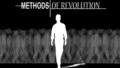
A promo for "Methods of Revolution".

A promo for "Methods of Revolution".
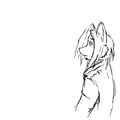
A furry drawn by Kayd Hendricks.
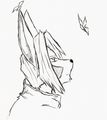
A furry drawn by Kayd Hendricks.
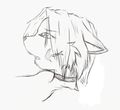
A furry drawn by Kayd Hendricks.
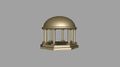
A 3D model uploaded by Kayd Hendricks.


Dawn's computer contained two more oddities - a locked file titled "IMPORTANT.odt" and another text file - "Hubris_Commands.odt". While the players were unaware of how to open the first file, the second file contained what appeared to be a list of computer commands:
Important commands for Hubris:
-youshouldntbehere.txt
--test txt file
-image1.png
--test image file
-Video.mp4
--test video file
-Password?
--password reminder
Unfortunately, the players weren't entirely sure where these commands should be entered.
What's in it?
a bunch of stuff relating to him and I assume his religion
but a odt called "IMPORTANT" that is password protected
Obviously we need to get into that
Having fully explored the contents of the Janus Room and Dawn's computer, the players began searching Withinhubris.com for a place to enter in these mysterious commands. Upon checking the site's front page, they found an invisible button that linked to a basic "Command Line" page hosted on the site. Here, the players began entering in the various different commands discovered above.
The commands listed above - "image1.png", "youshouldntbehere.txt", and "Video.mp4", all simply loaded in test files from other parts of Withinhubris.com. However, the third and final command - "Password?" - resulted in a list of desserts appearing on the page. Upon closer inspection, the players realized that the first letter of each of these desserts spelled out "gelato" - the third and final snack that Helper bought back in 2015. The players quickly discovered that this was actually the password needed to access "IMPORTANT.odt". Upon opening the file, the players were met with the following phrase:
Iamthelaw
This further cemented the connection between Dawn and TheLaw, though it must be stressed that Dawn isn't LITERALLY TheLaw - they are simply two different versions of the same person, similar to how BUP is a different version of Greth.
Shortly after this discovery was made, TheLaw posted the following:
TheLaw
"I've been found. Use what you know to find the forbidden knowledge. Use it to win."
Unfortunately, TheLaw's contact with the players is cut short as he's once again forced to flee - presumably from the same "croaking" entity mentioned previously. Spurred on by TheLaw's request to use their newly discovered forbidden knowledge, the players returned to Withinhubris.com's command line. Here, they discovered that this newly discovered phrase was another command. Entering "Iamthelaw" into Withinhubris.com resulted in an ASCII version of The Spire loading onto the page:
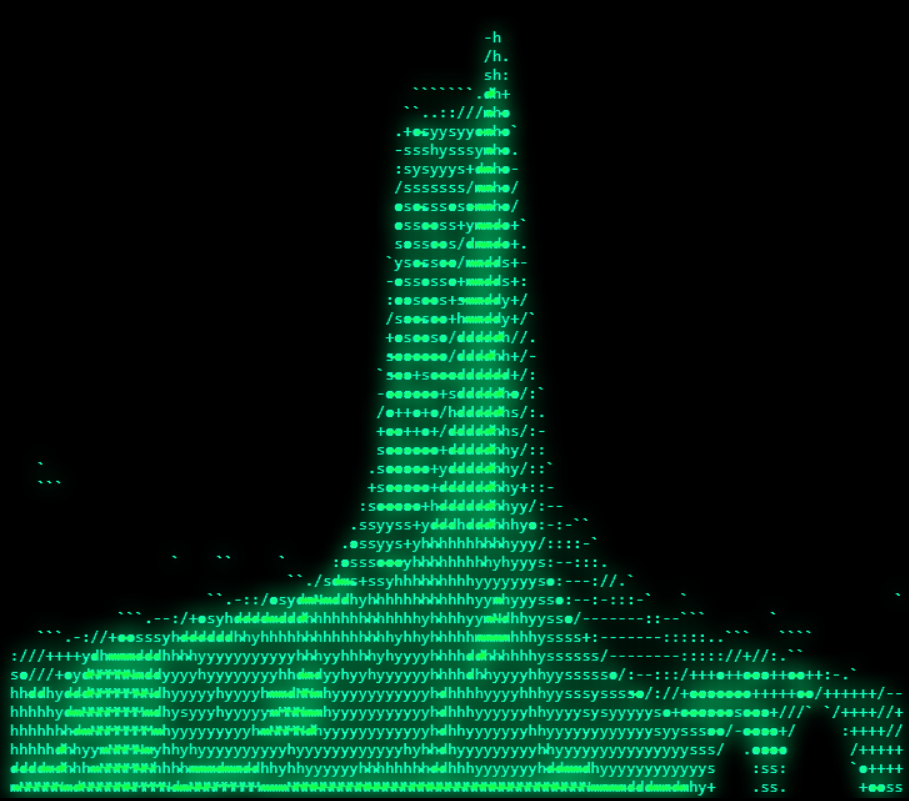
This was coupled with a URL for a new page on Johnisdead.com - "https://johnisdead.com/spire/home".

Checkpoint #1
On April 27th, 2020, the players began dissecting this new webpage. While initially appeared to be completely blank, further investigation revealed that it actually hid a rather large and complex Janus Room - a complete recreation of The Spire.
"The Spire" Janus Room hid many secrets. Just as before, the overview below will simply cover the basic layout of the Janus Room. The finer details and secrets hidden within it will be covered in more detail further below.
Continue reading:
